Key findings
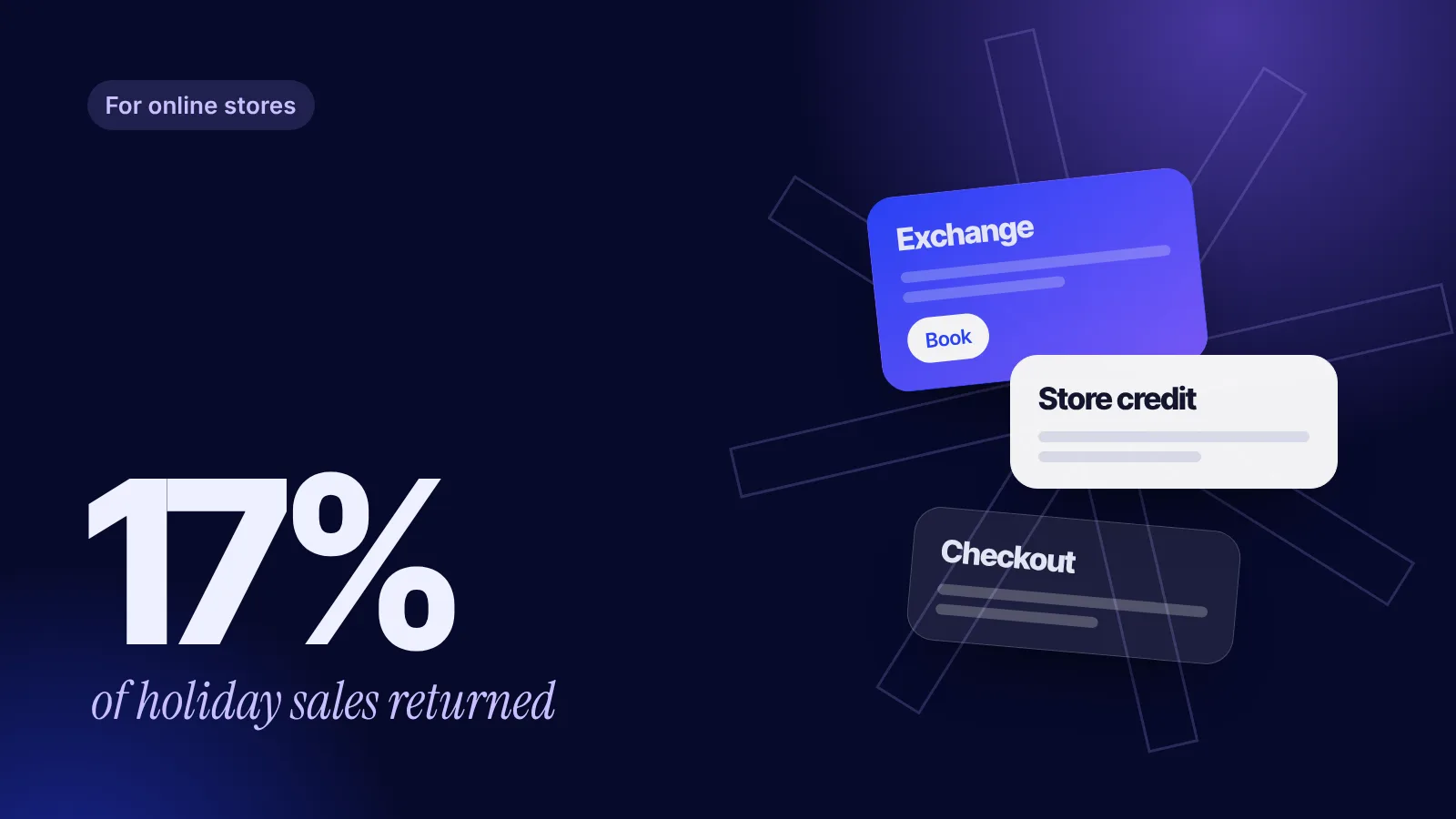
- Retailers expect about 17% of holiday sales to be returned, and 19.3% of online purchases overall (NRF, 2025).
- 82% of shoppers say free returns are a major factor when they buy; 71% are less likely to shop again after a bad return experience.
- UPS has marked the Monday after New Year’s as peak returns day. In 2027 that’s January 4.
- Cart abandonment averages 70.22%. Surprise extra costs are the top reason, at 40% (Baymard).
The second peak season
The National Retail Federation and Happy Returns estimated that 15.8% of all US retail sales would be returned in 2025, about $849.9 billion, with 19.3% of online purchases coming back. For the holidays specifically, retailers expected about 17% of sales to be returned. As PYMNTS put it in January 2026, returns have become “a second peak season with direct margin implications.” UPS has marked the Monday after New Year’s as peak returns day; in 2027 that falls on January 4.
For a small store, that’s two problems at once: margin walking out the door, and a customer deciding whether you’re worth buying from again.
Why the returns experience is a sales page
In the same NRF research, 82% of shoppers said free returns are a major consideration when buying, 76% were more likely to choose an option with an instant refund or exchange, and 71% said they were less likely to shop with a retailer again after a poor returns experience. A clumsy returns process doesn’t just cost the refund. It costs the next order.
A long-running example: Zappos built much of its reputation on a generous returns policy. You don’t need a 365-day window to learn from it. Clear, friendly returns make people more willing to buy in the first place.
8 fixes before January 4
- A returns page a stressed person can read. Window, cost, condition, how long the refund takes. Plain words, no legal maze.
- Offer an exchange first. Show “swap size or color” before “refund”. Tools like Loop Returns are built around exchange-first flows on Shopify.
- Store credit with a bonus. A small bonus for choosing credit instead of a refund keeps the revenue in your store.
- Gift recipients are new customers. They didn’t choose you. A gift-return flow that collects their email turns them into subscribers.
- A January welcome. People arrive with gift cards and refunds to spend. A “New here?” banner and a short welcome email series meets them.
- No surprise costs at checkout. In Baymard’s research, extra costs (shipping, taxes, fees) are the top reason for abandoning a cart, at 40%. Show them early.
- Fix the easy checkout leaks. 18% leave because the site required an account and 17% because checkout was too long or complicated. Offer guest checkout and cut fields.
- Check accessibility. Nearly 70% of ADA website lawsuits in the first half of 2025 targeted ecommerce stores. Labeled cart buttons and keyboard-friendly checkout protect you and help customers.
What to measure in January
Track three numbers through the returns season: the share of returns that become exchanges or store credit, the share of gift recipients who join your email list, and your checkout conversion rate. Baymard estimates the average large ecommerce site could gain a 35.26% increase in conversion rate through better checkout design alone. Small stores rarely need a full rebuild to see real gains. They need the leaks found and fixed.
Action items
Tick them off as you go. Nothing here needs a developer to start.
- Rewrite your returns page in plain language and link it from every product page and the cart.
- Turn on exchange-first or store-credit-with-bonus options in your returns tool.
- Add an email capture step to the gift-return flow.
- Prepare a January welcome banner and a three-email welcome series for new customers.
- Show shipping costs and delivery dates on product pages, not just at checkout.
- Enable guest checkout and remove any checkout field you don’t need.
- Run an accessibility check on your cart and checkout before January 4.
FAQ
Retailers expected about 17% of holiday sales to be returned in 2025, according to the NRF and Happy Returns. Online purchases have a higher return rate, about 19.3% across the year.
UPS has marked the Monday after New Year’s as peak returns day. In 2027 that is January 4.
Offer exchanges and store credit before refunds, make sizing and product information clearer, and make the returns page easy to follow.
Baymard’s research finds the top reason is unexpected extra costs (40%), followed by slow delivery, lack of trust, required accounts and long checkouts.
Anastasia Dvorzhanska is the founder of Beginning, a women-founded design studio in Los Angeles. 12+ years designing websites, checkouts and brands for growing businesses. More articles